Yellow Bells
Tecoma stans
FAMILY: Bignoniaceae (Trumpet-Creeper Family)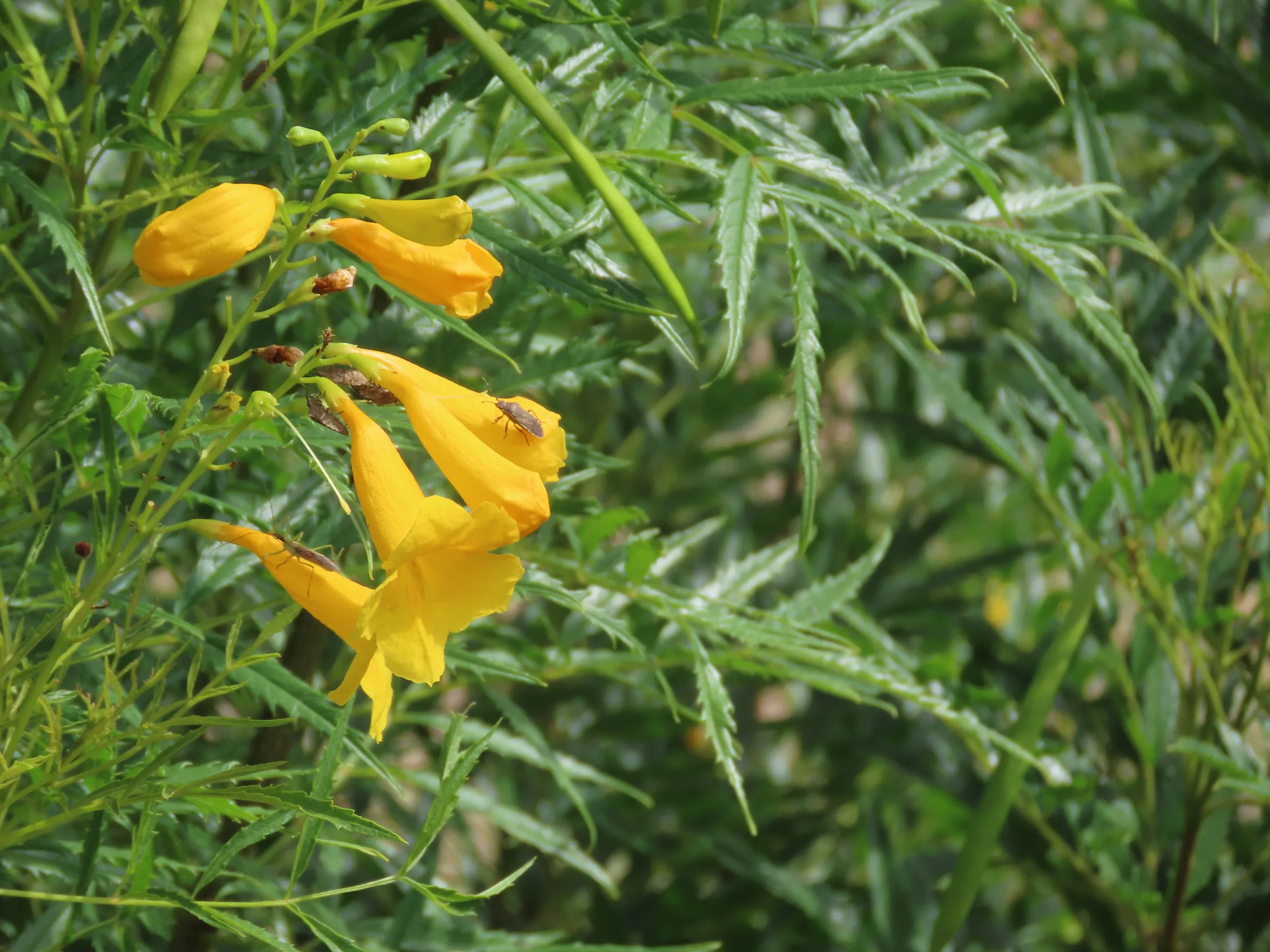
Yellow Bells
Tecoma stans
Texas Native Range Map10 REGIONS
Hover over highlighted ecoregions to inspect native range boundaries for Yellow Bells.
Chihuahuan Deserts, Southern Texas Plains (Trans-Pecos & South Texas)
[ VERIFIED BOTANICAL REPOSITORIES ]
AUTHORITATIVE DATA NODESBotanical specifications, native range classifications, and ecological benefits verified against official Texas botanical repositories.
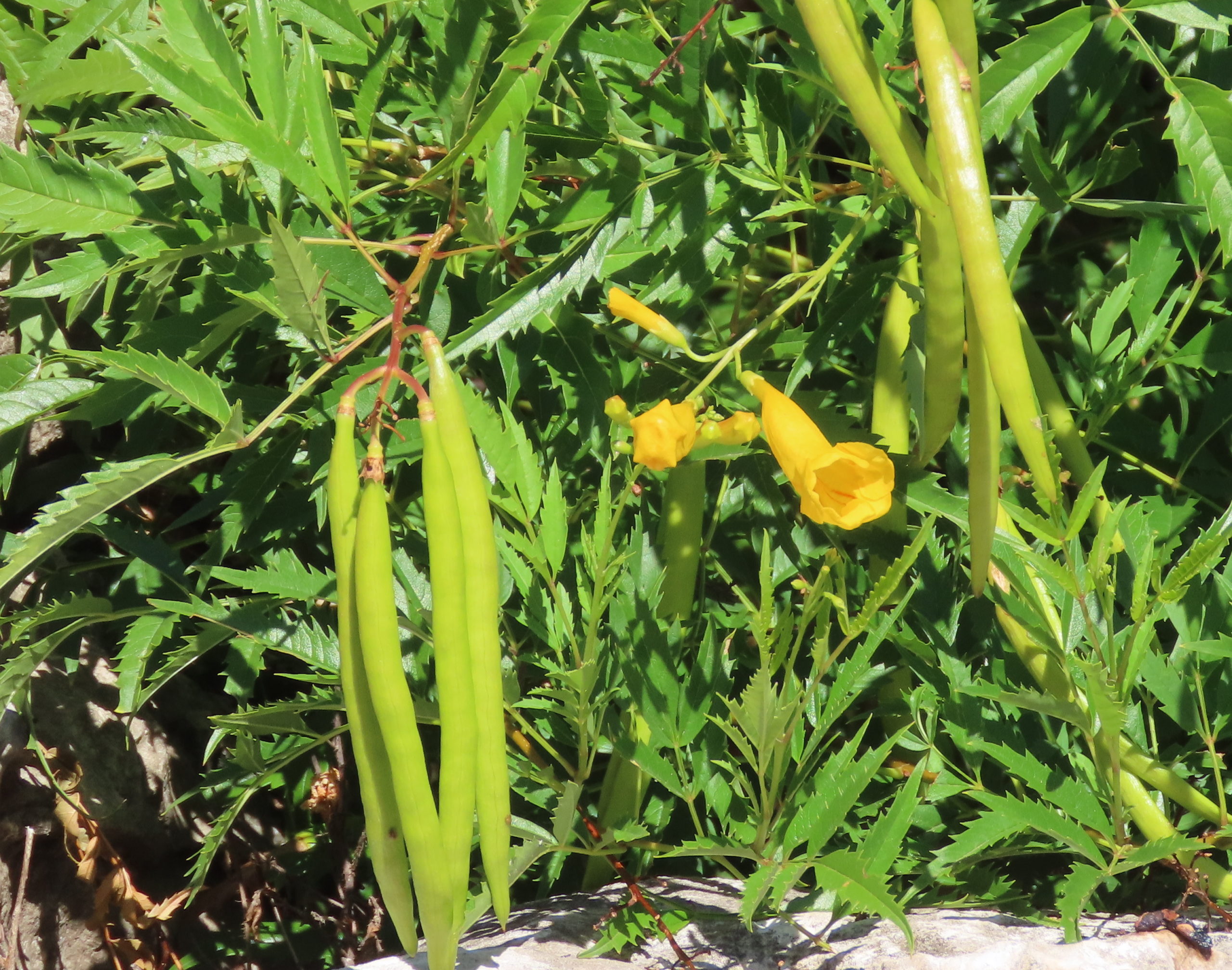
Tecoma stans (Yellow Bells or Esperanza) is a spectacular native Texas shrub valued for its dense clusters of vibrant, golden-yellow trumpet-shaped flowers set against dark olive-green pinnate foliage. Native to rocky slopes, limestone hillsides, and desert canyons across Texas and the Southwest, it thrives in full sun and heat with minimal water once established.
4 to 8 ft.
3 to 5 ft.
[ ECOLOGICAL ROLE & WILDLIFE ]
BLOOM: Bright Yellow / OrangeHigh nectar producer attracting hummingbirds, bees, and serving as larval host for Dogface butterflies.
Non-toxic to humans and domestic animals.
[ MAINTENANCE & PROPAGATION ]
Cut back to the ground if killed back by severe winter frost. Prune spent flower stalks to promote continuous blooming and bushy habit.