Candy Barrel
Ferocactus wislizeni
FAMILY: Cactaceae (Cactus Family)Candy Barrel (Ferocactus wislizeni), also widely known as the Arizona Barrel Cactus or Fishhook Barrel, is an iconic Southwestern barrel cactus native to the Chihuahuan Basins and Playas within the Chihuahuan Deserts across southern Arizona, southwestern New Mexico, and far west Texas (El Paso County). Forming a massive, single ribbed cylinder typically 4 to 6 feet tall (reaching up to 10 feet with age), mature specimens often lean distinctly toward the southwest, earning the species its popular moniker 'compass barrel'. The stem is lined with 20 to 30 prominent vertical ribs bearing dull white to brown spine clusters, featuring a dramatic, strongly hooked 5-inch central fishhook spine. During late summer (July through September), the crown produces a striking ring of yellow, orange, and red flowers. Flowering is followed by bright yellow, fleshy barrel-shaped fruits that persist on the plant, providing critical forage and moisture for desert birds, desert tortoises, and small mammals. Demonstrating exceptional heat and frost hardiness, Candy Barrel thrives in full sun and fast-draining sand or gravel substrates, requiring minimal supplemental water once established.
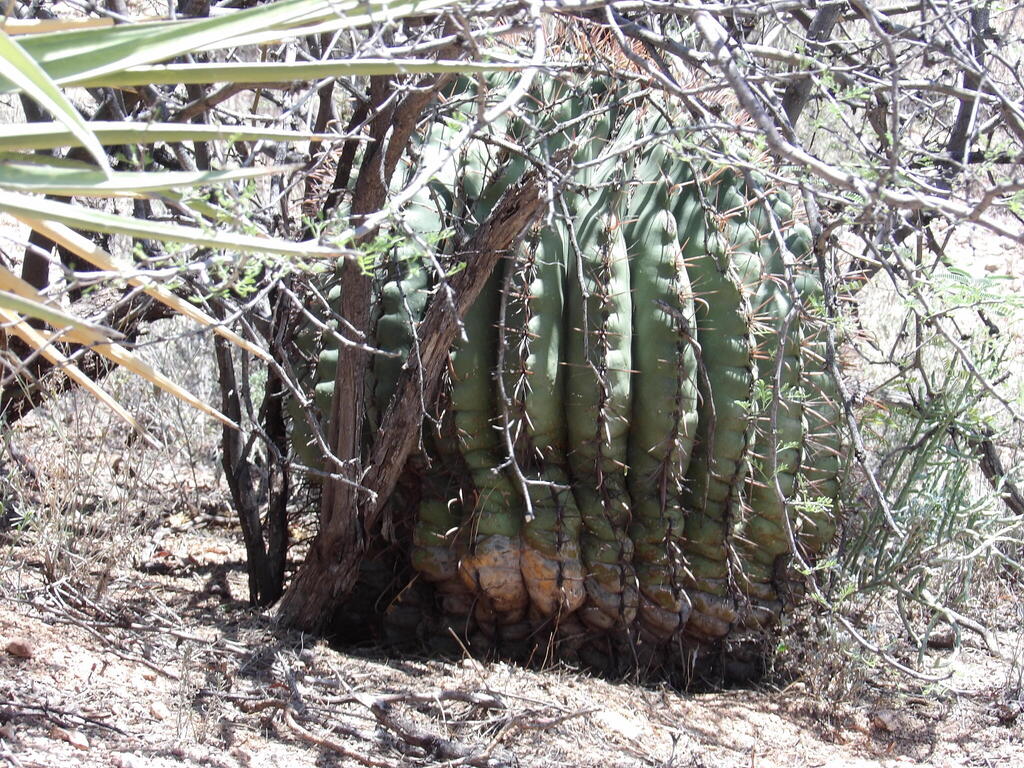
Candy Barrel
Ferocactus wislizeni
Texas Native Ecoregions2 REGIONS
Chihuahuan Basins and Playas
4 to 6 ft. (up to 10 ft.)
2 to 3 ft.
Persistent / Evergreen Stem
Late summer flowers attract native desert bees and pollinators; bright yellow fleshy fruits provide key forage and moisture for birds, small mammals, and desert wildlife.
Non-toxic to humans, birds, and domestic animals (sharp spines require cautious placement).
Low maintenance; requires fast-draining soil and full sun.