Inland Sea Oats
Chasmanthium latifolium
FAMILY: Poaceae (Grass Family)A resilient native native Texas grass & sedge that provides year-round foliage and structure to the landscape. Native across the Cross Timbers, East Central Texas Plains, Edwards Plateau, Gulf Coast Prairies and Marshes, Southern Texas Plains, Texas Blackland Prairies, and Western Gulf Coastal Plain, Inland Sea Oats (Chasmanthium latifolium) thrives in local conditions while supporting the surrounding ecosystem. Distinguished by dark foliage that is green, it offers an exceptional visual and tactile texture. During summer and fall, the plant produces green flower clusters. Flowering is followed by tan that add vibrant visual contrast and seasonal interest. It plays a vital ecological role as Pepper & salt skipper butterfly, Bell's road side skipper butterfly, Bronzed roadside skipper butterfly. Seeds eaten by small mammals and granivorous birds. Leaves provide graze for mammals. Stems and leaves used as nesting material by birds. Thriving in calcareous, clay, limestone, loam, moist, poor drainage, and sand, Inland Sea Oats demonstrates outstanding hardiness once established. It requires minimal supplemental water and adapts seamlessly to drought conditions. It features high deer resistance.
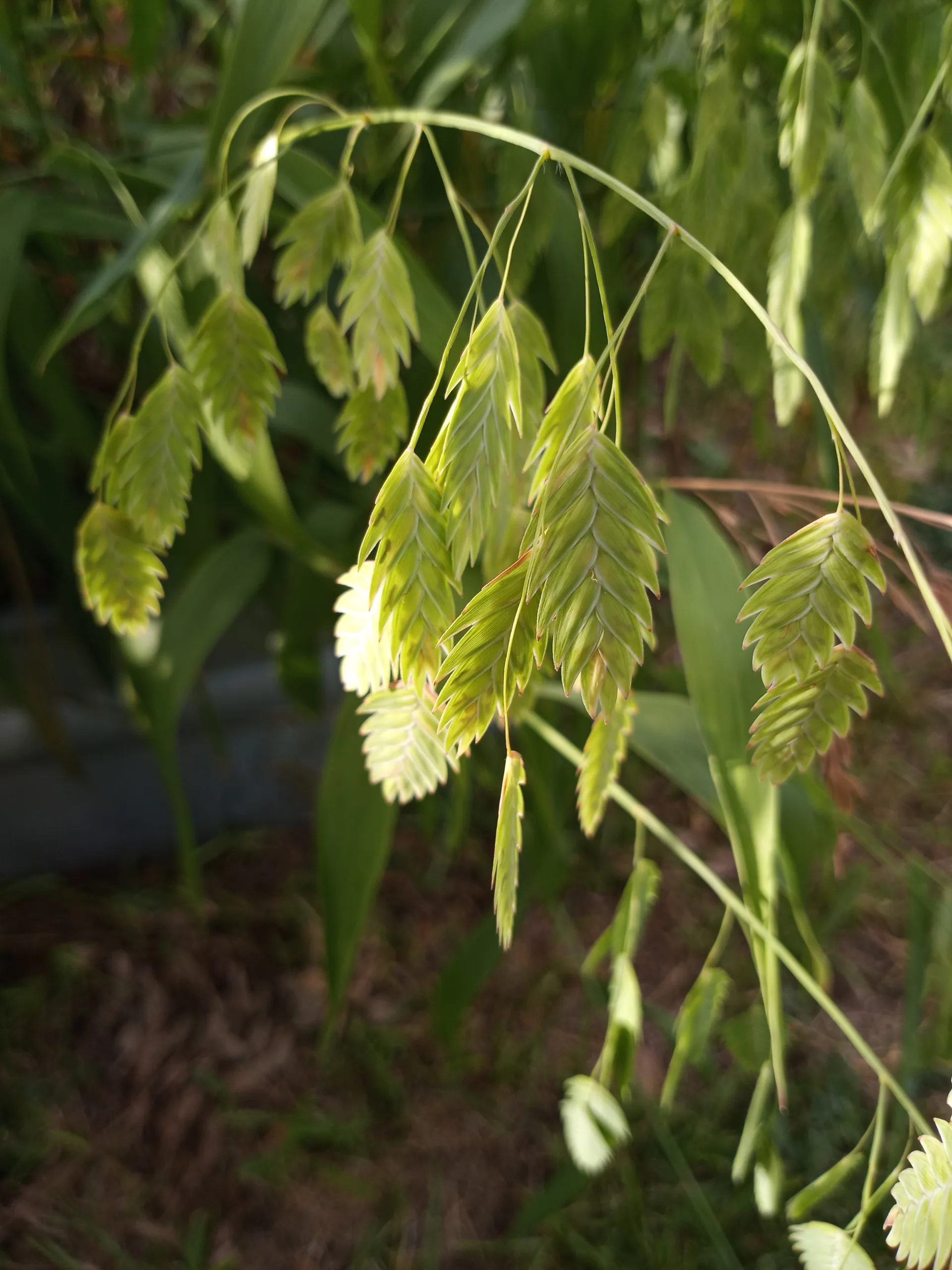
Inland Sea Oats
Chasmanthium latifolium
Texas Native Ecoregions36 REGIONS
Cross Timbers, East Central Texas Plains, Edwards Plateau, Gulf Coast Prairies and Marshes, Southern Texas Plains, Texas Blackland Prairies, Western Gulf Coastal Plain
2 ft.
2 ft.
Deciduous
Larval food plant for: Pepper & Salt Skipper (Amblyscirtes hegon), Bell's Roadside Skipper (Amblyscirtes belli), Bronzed Roadside Skipper (Amblyscirtes aenus)
Larval host plant for Pepper & Salt Skipper (Amblyscirtes hegon), Bell's Roadside Skipper (Amblyscirtes belli), and Bronzed Roadside Skipper (Amblyscirtes aenus) butterflies. Seeds eaten by small mammals and granivorous birds.
Non-toxic to humans, birds, and domestic animals.
Low maintenance once established.