Tree•USDA: ILVO•PLANTED: SPRING 2025•
Yaupon Holly
Ilex vomitoria
FAMILY: Aquifoliaceae (Holly Family)ALSO KNOWN AS:
Cassina
A vital larval host plant for Central Texas butterflies including Dusky-blue Groundstreak, Henry's Elfin, and Henry's Elfin Butterfly, Yaupon Holly (Ilex vomitoria) is a evergreen Texas tree native across the East Central Texas Plains, Edwards Plateau, Gulf Coast Prairies and Marshes, Texas Blackland Prairies, and Western Gulf Coastal Plain.
During Spring, the plant produces white blooms. Flowering is followed by ornamental drupes red, spherical, shiny, up to 1/4 inch in diameter, containing 4 nutlets. although technically drupes, the fruit is commonly referred to as berries that add seasonal interest.
It plays a key ecological role as a larval host plant for Central Texas butterflies, including Dusky-blue Groundstreak, Henry's Elfin, and Henry's Elfin Butterfly. Many species of birds eat the fruit but usually only in late winter after several freezes and thaws. Mammals eat the fruit as well, and the flowers attract insects. Birds employ the dense branches for nesting sites.
Thriving in clay, gravelly, limestone, loam, moist, poor drainage, sand, and well drained, Yaupon Holly demonstrates outstanding hardiness once established. It requires minimal supplemental water and tolerates dry spells with ease. It offers moderate deer resistance.
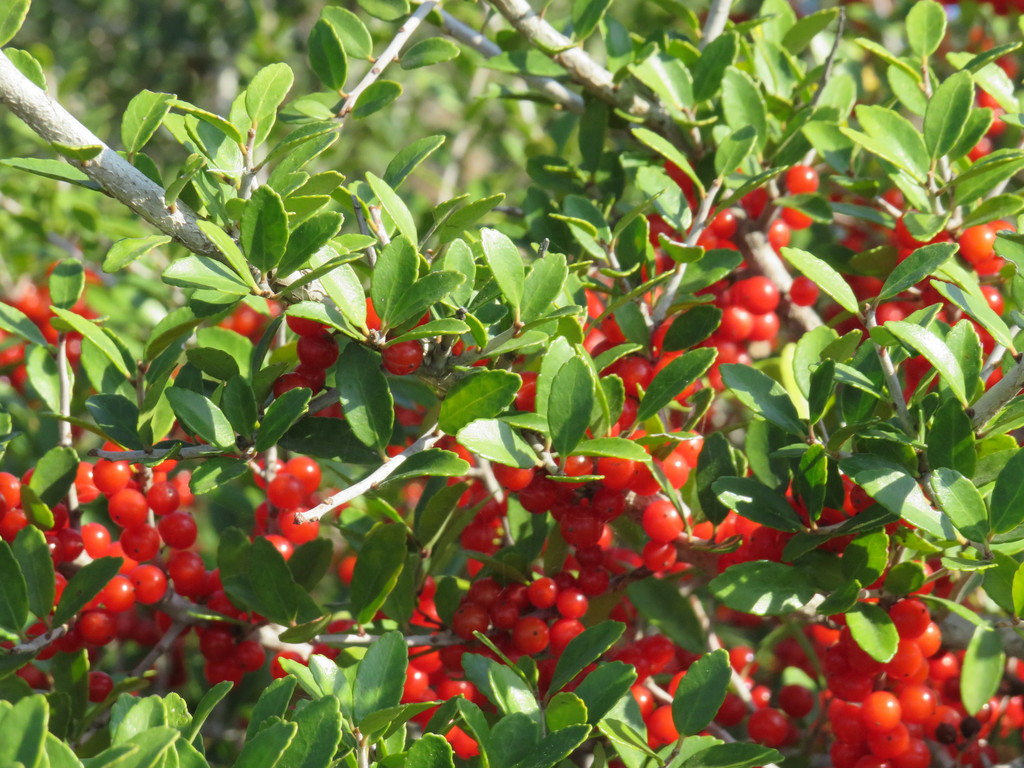
Yaupon Holly
Ilex vomitoria
NATIVE RANGE // EPA & NPSOT
Texas Native Ecoregions26 REGIONS
[ INITIALIZING GEOSPATIAL MAP DATA... ]
East Central Texas Plains, Edwards Plateau, Gulf Coast Prairies and Marshes, Texas Blackland Prairies, Western Gulf Coastal Plain
SOURCE: US EPA L3/L4 ECOREGIONS • NPSOT VERIFIED30.1727° N, 98.0873° W (DRIPPING SPRINGS, TX)
GROWTH & VISUAL PROFILEPerennial • Shrub, Tree
↕HEIGHT
12 ft.
↔SPREAD
8 ft.
🌱GROWTH
Moderate
🌲FOLIAGE
Evergreen
BLOOM COLOR
White
BLOOM CALENDARSpring (3 MO)
JANFEBMARAPRMAYJUNJULAUGSEPOCTNOVDEC
BOTANICAL ALIASES & ALTERNATE NAMES1 ALIAS
Cassina
ECOLOGICAL ROLE & WILDLIFE
🦋 CENTRAL TEXAS LARVAL HOST PLANT
Larval food plant for: Dusky-blue Groundstreak, Henry's Elfin, Henry's Elfin Butterfly
ATTRACTS & SUPPORTS
Larval Host: Henry's Elfin ButterflyLarval Host: Henry's ElfinLarval Host: Dusky-blue GroundstreakBirdsButterfliesNectar InsectsSmall Mammals
Larval host plant for Central Texas butterflies: Dusky-blue Groundstreak, Henry's Elfin, and Henry's Elfin Butterfly. Verified online via Texas Entomology (Mike Quinn), Lady Bird Johnson Wildflower Center. Verified via Texas Entomology (Mike Quinn, texasento.net) and Lady Bird Johnson Wildflower Center (wildflower.org).
WATER NEEDLow, Medium (Drought Tolerant)
VL
LOW
MOD
HIGH
SOLAR NEEDSun, Part Shade, Shade
SHADE
PART SHADE
PART SUN
FULL SUN
SUBSTRATE & SOILpH: Neutral to Alkaline
ClayGravellyLimestoneLoamMoistPoor DrainageSandWell Drained
⚠️ BOTANICAL SAFETY NOTICE
Non-toxic to humans, birds, and domestic animals.
MAINTENANCE & PROPAGATION
Low maintenance once established.