Tree•USDA: RHUS•PLANTED: SPRING 2026•
Flameleaf Sumac
Rhus copallinum var. lanceolata
FAMILY: Anacardiaceae (Sumac Family)ALSO KNOWN AS:
Prairie Flameleaf SumacPrairie SumacLance-leaf SumacLance-leaved SumacTexas SumacTree SumacLimestone SumacPrairie Shining Sumac
Native across the Chihuahuan Deserts, Cross Timbers, East Central Texas Plains, Gulf Coast Prairies and Marshes, Texas Blackland Prairies, and Western Gulf Coastal Plain, Flameleaf Sumac (Rhus copallinum var. lanceolata) is an adaptable deciduous tree valued for both ornamental appeal and ecosystem support.
During Summer, the plant produces green, white, yellow blooms.
It plays a key ecological role as a larval host plant for Central Texas butterflies, including Dusky-blue Groundstreak. It provides essential nectar, shelter, or forage for native wildlife, including Bees, Birds, Browsers, Butterflies, and Small Mammals.
Best suited to calcareous, clay, dry, gravelly, limestone, and well drained, Flameleaf Sumac adapts seamlessly to local soil conditions. It requires minimal supplemental water and tolerates dry spells with ease.
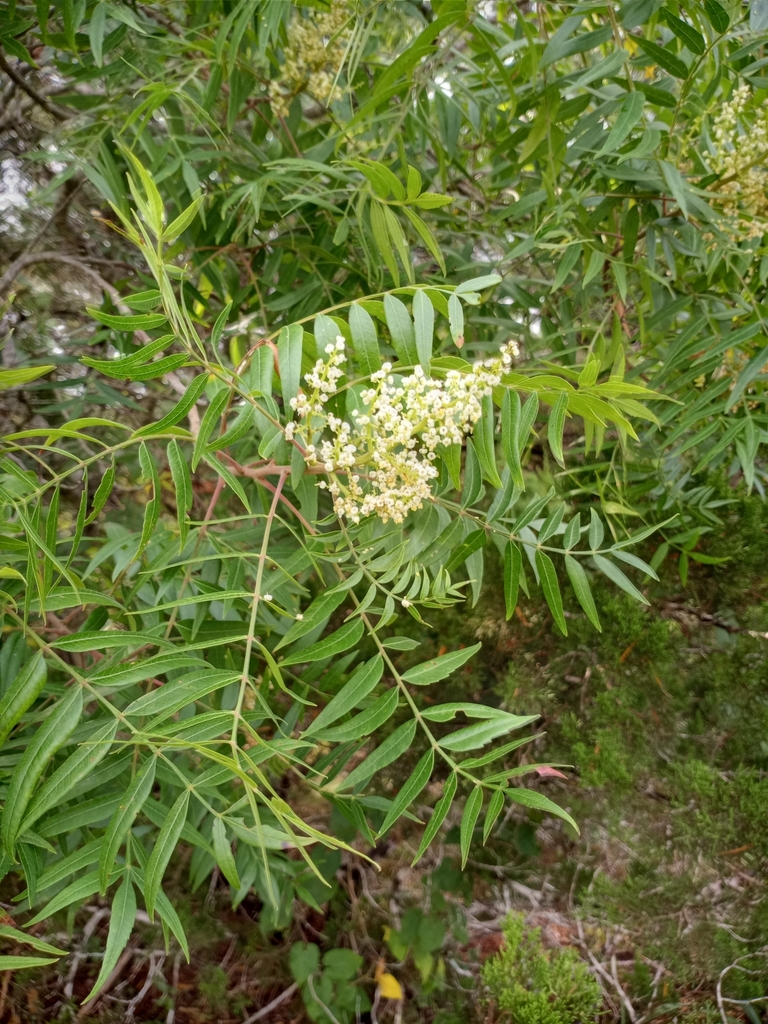
Flameleaf Sumac
Rhus copallinum var. lanceolata
NATIVE RANGE // EPA & NPSOT
Texas Native Ecoregions23 REGIONS
[ INITIALIZING GEOSPATIAL MAP DATA... ]
Chihuahuan Deserts, Cross Timbers, East Central Texas Plains, Gulf Coast Prairies and Marshes, Texas Blackland Prairies, Western Gulf Coastal Plain
SOURCE: US EPA L3/L4 ECOREGIONS • NPSOT VERIFIED30.1727° N, 98.0873° W (DRIPPING SPRINGS, TX)
GROWTH & VISUAL PROFILEPerennial • Tree
↕HEIGHT
12 ft.
↔SPREAD
10 ft.
🌱GROWTH
Fast
🍂FOLIAGE
Deciduous
BLOOM COLOR
Green
White
Yellow
BLOOM CALENDARSummer (3 MO)
JANFEBMARAPRMAYJUNJULAUGSEPOCTNOVDEC
BOTANICAL ALIASES & ALTERNATE NAMES8 ALIASES
Prairie Flameleaf SumacPrairie SumacLance-leaf SumacLance-leaved SumacTexas SumacTree SumacLimestone SumacPrairie Shining Sumac
ECOLOGICAL ROLE & WILDLIFE
🦋 CENTRAL TEXAS LARVAL HOST PLANT
Larval food plant for: Dusky-blue Groundstreak
ATTRACTS & SUPPORTS
Larval Host: Dusky-blue GroundstreakBeesBirdsBrowsersButterfliesSmall Mammals
Larval host plant for Central Texas butterflies: Dusky-blue Groundstreak. Verified online via Texas Entomology (Mike Quinn). Verified via Texas Entomology (Mike Quinn, texasento.net) and Lady Bird Johnson Wildflower Center (wildflower.org).
WATER NEEDLow, Medium (Drought Tolerant)
VL
LOW
MOD
HIGH
SOLAR NEEDSun
SHADE
PART SHADE
PART SUN
FULL SUN
SUBSTRATE & SOILpH: Neutral to Alkaline
CalcareousClayDryGravellyLimestoneWell Drained
⚠️ BOTANICAL SAFETY NOTICE
Non-toxic to humans, birds, and domestic animals.
MAINTENANCE & PROPAGATION
Low maintenance once established.